
Town of Union Previous Resident Era
A backward address trail has two layers. A deed describes a recorded conveyance between parties. Directories, census schedules, newspapers, and family material can supply historical household clues. The records use different keys and do not cover the same years. Start with the most recent reliable parcel information, then choose the next source by the date of the transfer or address change rather than assuming there is one complete list of past residents.
| Source | Years It Covers | Where Held | What It Shows |
|---|---|---|---|
| SearchIQS land index and images | 1963-present | Broome County Clerk portal | Recorded land parties, index data, images, and book or page references |
| Historical Record Books | 1805-1962 | SearchIQS historical collection, counter, or research route | Older recorded instruments, including deed-book material |
| Historical Index Books | Grantor and grantee, 1806-1939 | SearchIQS historical collection, counter, or research route | Name bridge to older instruments |
| Binghamton directories | 1857-1946 in listed runs | New York State Library and local-history collections | Dated name and address clues with locality labels |
| Federal census schedules | Public releases through 1950 | Library and federal research channels | Household context and residence geography |
The SearchIQS Broome availability page separates the modern land index from the older books. That comparison is important for a 1950 transfer: it may sit in the historical shelf even though a later transfer is found through the modern index.
Town of Union Previous Resident Parcel
First identify the parcel, its situs address, and its tax-map reference. The Image Mate sample property card illustrates the kind of bridge a tax record can provide: parcel information, current assessment context, and a deed-book and page reference. It is a lead into the recorded land file, not the conveyance itself and not proof that a listed mailing address was a place where someone lived.
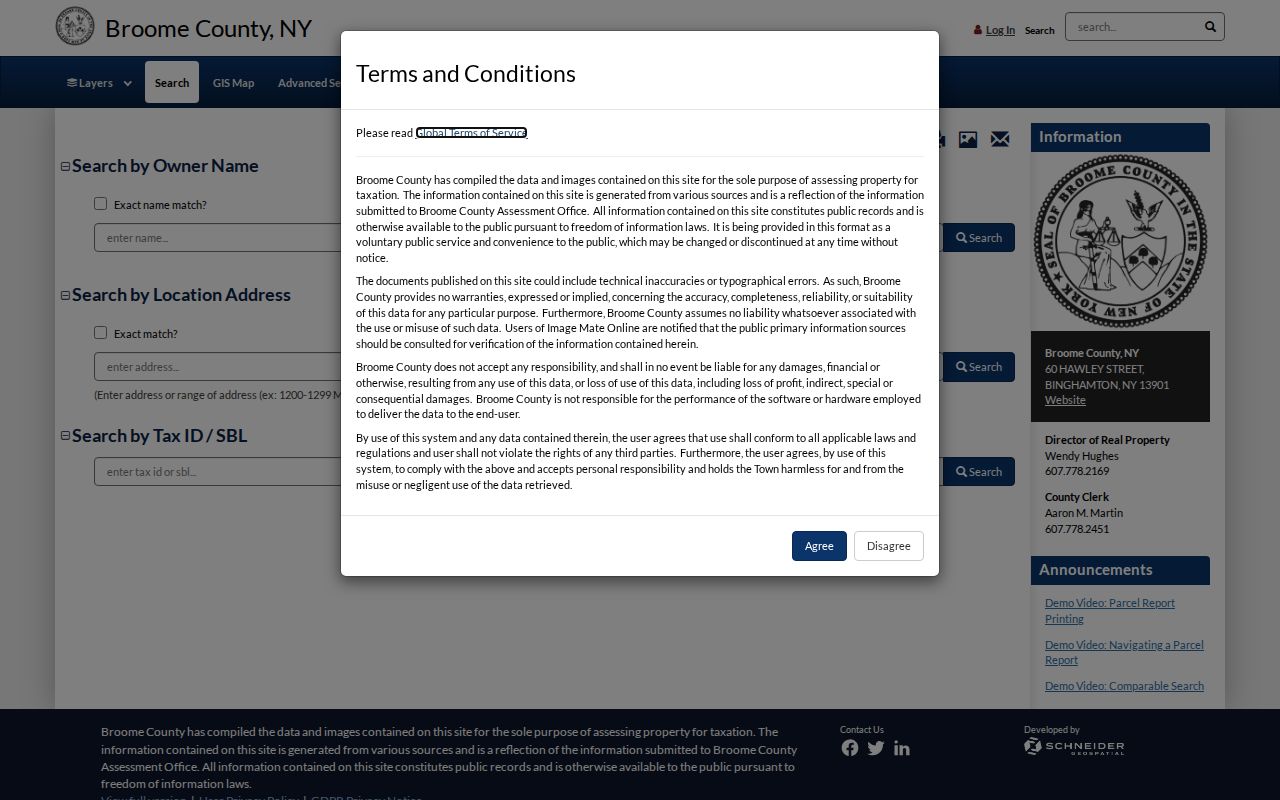
Keep the parcel ID, tax-map sheet, situs, owner-of-record, and the date shown by the source in one note. The research sample at 1765 Peckham Road, for example, ties tax ID 192.01-1-27 to deed book 2681, page 687. That is the kind of documented connection to follow, while avoiding any claim about a current occupant.
Trace Town of Union Deed Records Backward
The Broome County Clerk SearchIQS portal is the starting point for a recorded land transfer in the modern series. A chain of title is built from conveyances, not from the assessment record. Each step should preserve the party names as printed, the recording date, document type, book and page, and the parcel or legal description carried by the actual instrument.
- Use the parcel card or known deed reference to find the most recent recorded transfer. Save the parcel ID, situs, book and page, and instrument number when available.
- Read the deed to identify the grantee, the buyer, and the grantor, the seller. Confirm that the parcel description fits the property being traced.
- Search the seller as a grantee to locate that party's earlier purchase. Use name variants, initials, a narrow date window, and the document type when needed.
- Repeat the sequence backward, saving every link rather than replacing an old note with a new name. If an older result disappears under a Town filter, remove that filter because historical documents may not be indexed by town.
- When the modern series ends, move to the historical Index Books and Record Books. Carry the prior party, book, page, and legal description into that separate search route.
- Grantor and grantee
- The grantor transfers an interest. The grantee receives it. Their roles are specific to one recorded instrument.
- Chain of title
- A dated sequence of recorded transfers for the same parcel or legal description. It is not a list of everyone who may have lived there.
- Legal description
- The property wording in a deed or related instrument. It can distinguish the same parcel when a street number, road alignment, or place label has changed.
Town of Union Previous Resident Eras
SearchIQS uses separate historical and modern routes. Modern land index data and images begin in 1963. Historical Record Books cover 1805-1962, while grantor and grantee Index Books cover 1806-1939. Deed books 1-1061 are part of the historical record-book coverage through page 673. These are overlapping research tools, not interchangeable date promises.
The `D` prefix belongs to a modern deed-book search, such as a search entered with `D` before the book number. Do not carry that prefix into the historical Index Books route. If the online series or a town filter does not surface the needed item, use the older book collection, the public counter, or a specific request with the party, date range, book, page, or instrument number. Broader web descriptions of land coverage use different starting dates, so the portal's series label is the safer guide for a particular search.
Index data and document images are not the same thing. An index can identify the parties and recording reference, while the image carries the instrument's actual wording. Save a useful result before changing search terms, then inspect the first recording page and the conveyance pages together. For older material, the portal, counter, and research collection are complementary access channels, not duplicate databases.
Pair Town of Union Records With Census
After locating a deed transfer, use the closest available directory year to look for a historical listing at or near that address. The historical volumes themselves are described on the Town of Union City Directory page. A listing can support an address clue, but it does not prove that a person occupied the property for the whole year or that the person was the owner. Keep the recorded transfer and the listing in separate columns of the research notes.
- Place each deed in date order and note the first directory run before or after that transfer.
- Copy the directory's locality heading, address format, and name spelling. A listing under Endicott or Lestershire needs its own place-name check.
- Compare the nearest public federal census year for household composition and residence geography. Public releases currently run through 1950 under the 72-year rule.
- Use newspaper microfilm, family files, or an eligible vital-record route to test a move, death, or relationship suggested by the dates.
Criss-cross directories, when available for the relevant place and year, are arranged by street address and number rather than by name. They are useful address-first clues, not a substitute for the deed chain or a complete household record.
Town of Union Address Place Records
Town of Union history creates several search labels for the same general area. Lestershire was incorporated in 1892 and became Johnson City in 1916. Endicott was incorporated in 1906, then the villages of Endicott and Union merged in 1921. Search an old address with the name in use at the time, not just the present postal label.
For a pre-1916 address, try Lestershire as well as Johnson City. A former Union village reference may shift into Endicott material after 1921. Preserve the label used by each deed, directory, map, or newspaper. That small discipline prevents a searcher from treating a renamed locality as a different property without evidence.
Town of Union Records After Route 17
Route 17 construction in 1967 removed homes and the old ballpark in the Johnson City area. For an address near that corridor, a modern map or parcel outline may not preserve the road pattern visible in an older deed or directory. A street number can disappear, move, or become hard to relate to a current parcel without additional evidence.
Use historic maps, aerial imagery, and newspaper material with the deed chronology. The Broome County Clerk map resources include historic surveys, subdivision, highway-appropriation, and atlas material, including the Boston Purchase Map of 1791. That map is historical context, not proof of a modern parcel boundary. Older maps may be indexed by surveyor, map name, or date rather than by a street address.
Town of Union Tax Cards and Deeds
A tax card and a deed answer different questions. The assessment record can identify the parcel, owner-of-record, mailing address, property class, assessment context, and a useful book or page reference. The deed is the recorded instrument that establishes what was conveyed, when it was recorded, and the parties and property language involved. Do not turn a mailing address into an occupancy claim, and do not treat a tax-card name as a complete transfer history.
The 1914 Binghamton directory catalog record is a separate historical clue, not a property document. Its title names Union, East Union, Endicott, and Lestershire among the covered places.
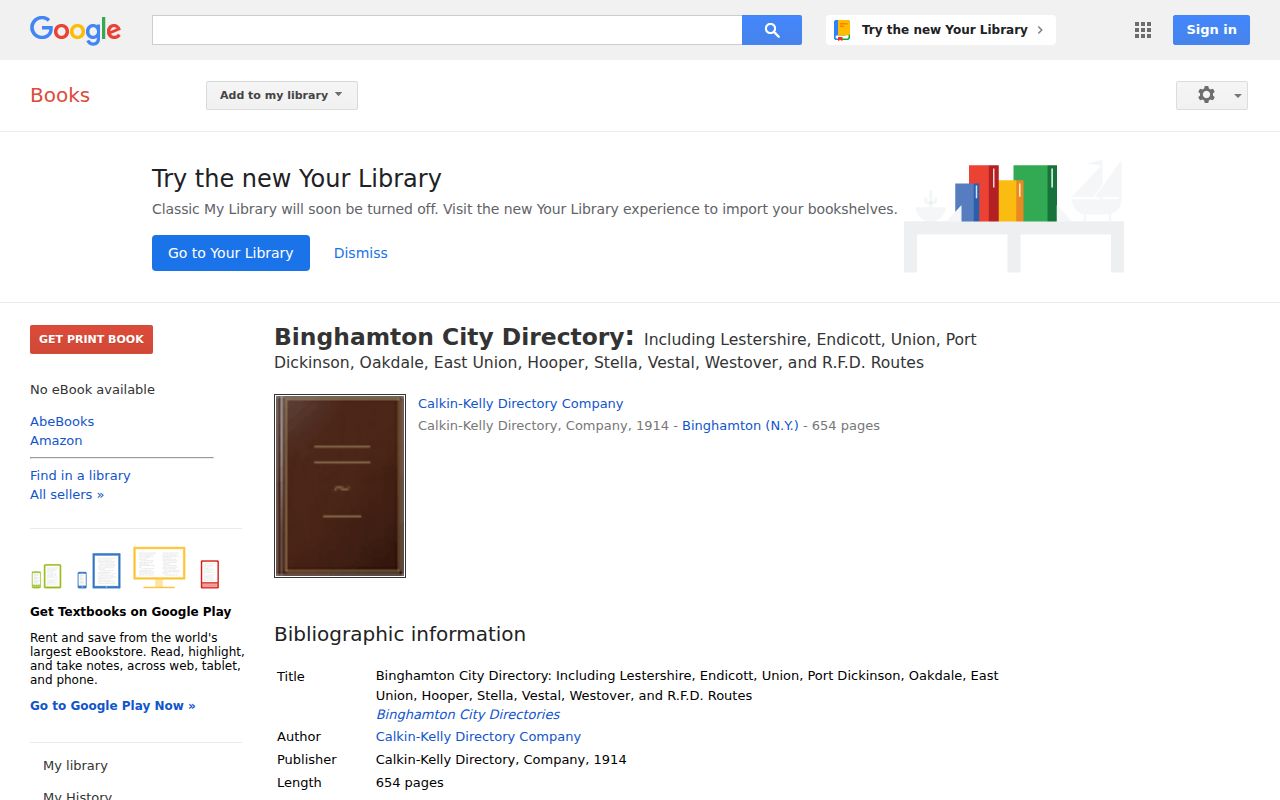
Read the actual directory page, then pair it with the closest deed and census evidence. The three sources can describe the same address from different angles without proving the same fact.
Lawful Town of Union Previous Residents Research
House-history and family-history work should stay tied to a documented address, a historical period, and the record custodian. Previous residents research can help interpret a parcel's past, confirm a family connection, or read a historical map. If a result concerns a living person or a protected address, stop rather than trying to fill gaps by combining sources.
Use records with care. Past-resident research is for documented family and house history. Do not use a record trail to track, contact, harass, or harm a living person.
No complete official Town of Union obituary index, cemetery database, or parcel-by-parcel deed-chain sample was located in the research. The Broome County Local History & Genealogy Center, local-history staff, and the record custodian are the appropriate fallbacks for a missing year, an unindexed family lead, or a difficult address transition.