
Town of Union City Directory Holdings
The historical shelf is regional, not a separate Union-only run. That distinction matters. A Binghamton volume can include Town of Union material alongside Endicott, Johnson City, rural routes, and other nearby places. Keep the edition year, page, publisher, and the locality heading with every note. The usable collection has several gaps, but its long span makes it valuable for following a family or address across more than one generation.
| Collection | Years | Where Held | Access |
|---|---|---|---|
| Binghamton directories | 1857-1859/60; 1869-1880; 1883-1893; 1895-1900; 1902-1946 | New York State Library | Fiche and film |
| Calkin-Kelly Binghamton City Directory | 1914 edition | Google Books catalog and library collections | Catalog and collection access |
| Binghamton telephone books | 1922-1923; 1935-1942 | New York State Library | Film |
| Rural Directory of Broome County | 1917 | NYG&B collection and libraries | Searchable digital collection or library use |
The New York State Library directory listing identifies the Binghamton runs and their format. Its date blocks are not one uninterrupted annual sequence. Telephone volumes are thinner still, so a missing name may reflect a gap, a rural route, a spelling variant, a recent move, or a person who did not have a listing. This matters most when a common surname appears in several nearby localities during the same period.
1914 Town of Union Directory Quirk
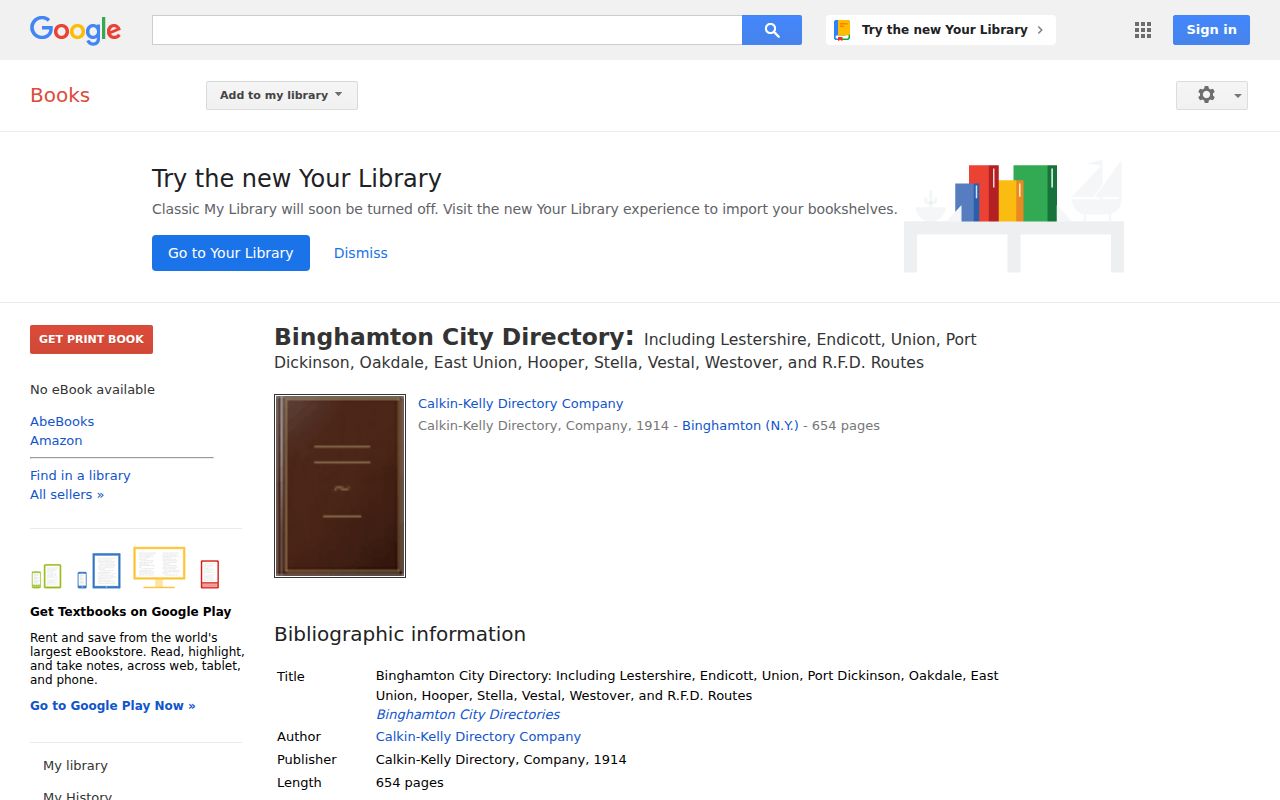
The 1914 Calkin-Kelly volume is unusually helpful because its title openly names Union, East Union, Endicott, Lestershire, Port Dickinson, Oakdale, Vestal, Westover, and rural routes. That is a regional promise, not proof that every entry belongs to the present Town of Union. The publication has 654 pages, enough room for many neighboring localities with their own street patterns and civic history.
The Google Books catalog record for the 1914 directory shows the multi-place title before a searcher reads any entry.
Record the exact locality printed beside a listing. A reference to Union, East Union, Lestershire, or Endicott should stay in the research notes until an address and contemporary map show how it relates to the town boundary used today.
Town of Union City Directory Shelf Access
The Broome County Local History & Genealogy Center is the practical local fallback when an online result skips a year or when a directory reel, newspaper, obituary lead, family file, or map needs close reading. It is on the second floor of the Broome County Public Library. Listed public hours are Monday, Wednesday, Thursday, and Friday from 9 to 5, with Tuesday hours from noon to 8. The County Historian is listed Monday, Wednesday, and Friday from 10 to 2 or by appointment.
For a remote request, provide the full name, approximate year, town or village label, street, relatives, and sources already checked. The library accepts in-person, letter, and email inquiries, although the captured policy did not state a current research or copy fee. The center also provides a local route when an obituary index or family material is not available as a complete online database.
The State Library holdings page is the most direct way to confirm the Binghamton run before arranging access.
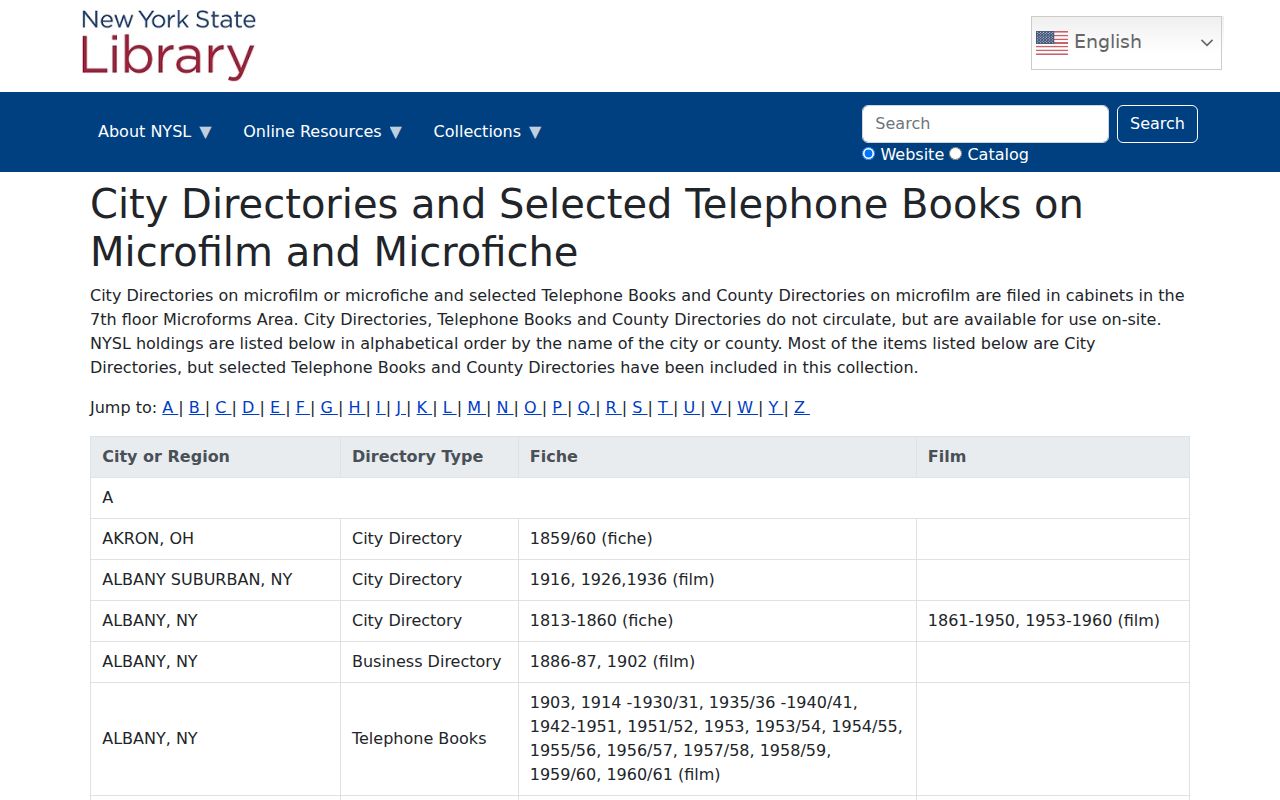
These holdings support a year-by-year comparison, but no official Town of Union-only directory index was found. The library and historian remain the stronger fallback for a difficult name or an unlisted year.
Rural Town of Union Directory Clues
The 1917 Rural Directory of Broome County gives a different kind of lead. It is arranged alphabetically and by town, with land location, crops, road maps, and advertisements. Those details can connect a family name to a road or farm setting when a modern-style street number is absent. Pair the result with a tax map, a recorded deed, and a census record instead of forcing an old rural description into a current address.
The NYG&B Broome histories and directories collection also includes county histories and biographical works. Its OCR can find a name quickly, but old type and proper names need a page-image check. Biographical sketches are leads, not independent proof of a historical listing.
Town of Union City Directory Companion Records
When a directory provides an address or a sudden disappearance, use a second dated source to test the lead. Local newspaper microfilm can hold obituaries, social notices, civic activity, legal notices, and address references. The local-history center is the physical fallback for those runs. Search the full name, a spelling variant, the historical locality, and a narrow date range. A newspaper notice can sharpen a date, but it should be read in context rather than treated as a full account of a household.
The Library of Congress directory and map guidance also helps with address-first work. Its Binghamton Sanborn set covers 1918 through November 1950 in 118 sheets, but a Binghamton map does not establish coverage of every Town of Union address. Where a sheet and locality match, it can help compare building footprint, use, nearby structures, and an older street pattern. It cannot identify who lived in a building.
Read Town of Union City Directory Entry
Copy the entry as printed before expanding it into a family story. The exact order and abbreviations vary by edition. A historical listing may give an adult's name, a house number and street, a trade or business clue, a spouse abbreviation, a telephone reference, or a locality heading. It may leave most of those fields out. The 1914 title is evidence of regional scope, not a model for every entry inside the book.
| Name form | Preserve initials, spelling, and any suffix exactly as printed before trying variants. |
|---|---|
| Address line | Copy the number, road name, and locality label together. A number alone may be misleading after road changes. |
| Trade or business clue | Use it to distinguish same-name people, then corroborate it with another dated record. |
| Household clue | A spouse abbreviation or shared address can suggest a connection, but it is not a full household roster. |
| Phone reference | Selected telephone books can supply a subscriber clue, while non-subscribers remain invisible. |
- Criss-cross directory
- An address-first directory arranged by street and number rather than by a person's name. It can supply a historical address lead when that edition exists.
- Householder index
- A name-arranged index or section identifying household heads as the particular volume defines them. Do not assume every Binghamton-area volume contains one.
- Abbreviation key
- The volume's own explanation of shortened terms, usually in its front or back matter. Read it before assigning meaning to a mark or letter.
Read the page heading and the abbreviation key before comparing names across editions. An apparent change can be a new street form, a different locality heading, or a publisher's shortened style. Preserve the original form first, then add a separate note for a modern map or spelling match. That keeps a later interpretation from overwriting the wording that appeared in the historical volume.
Town of Union City Directory Place Names
Place names are part of the evidence. Lestershire was incorporated in 1892 and renamed Johnson City on March 21, 1916. Endicott was incorporated in 1906, and the Union and Endicott villages merged in 1921. A directory search that uses only a current postal label can therefore miss a person, street, or business that was cataloged under an earlier locality.
Search both Lestershire and Johnson City for pre-1916 material. For the former Union village, compare entries on each side of the 1921 merger. An Endicott address today does not establish that the same legal unit existed when an old volume went to press. Local-history holdings can help interpret a boundary or place-name question that a directory page cannot answer alone.
Trace Town of Union Directory Homes
Use a short, controlled sequence rather than jumping between every available year. The goal is to build a dated trail and leave room for uncertainty. Federal census schedules released to the public run through 1950 under the 72-year rule. Before 1850, census schedules usually name only the head of household, so later directories can be especially helpful for separating names in the same locality.
- Start with the clearest known name spelling and choose the nearest available directory year.
- Copy the page, locality heading, street, and every useful abbreviation without modernizing them.
- Check the next available directory run for the same name and address, then record a move, gap, or spelling change rather than guessing a reason.
- Pair the closest directory year with the matching federal census release to test household members, age pattern, and residence geography.
- Use newspaper microfilm, local-history files, or a vital-record route to investigate a death, marriage, or departure suggested by the dated trail.
A person who disappears may have moved, died, changed a spelling, used a rural route, or simply been omitted. The Library of Congress reverse-directory guidance describes another address-first route when a relevant directory can be requested by place and year. It does not create a complete Town of Union address index.
Town of Union City Directory Gaps
Directories work best as dated clues. They do not prove that a person stayed at an address for an entire year, establish a legal ownership transfer, or turn a subscriber list into a complete population count. A telephone listing can miss anyone without service. An OCR hit can be wrong. A publication that covered a wide region can place a familiar name outside the town.
For a current parcel or owner-of-record question, use the address-based route on the Town of Union Streets page and then confirm the recorded instrument through the proper custodian. That separate process avoids reading a historical directory as a current record.