
Finding Town of Union Residents
No single roll lists every household in Town of Union. So start with the fact you need. An address opens one path and a name opens another. A street address can lead to a parcel, an assessment card, a tax bill, a deed, a permit request, or an old street directory entry. A name, meanwhile, has to be checked against dated records that different offices hold. That split matters more than most searchers expect. A current assessment card names an owner of record, while a historical city directory may list a subscriber or a household member. Neither record supports a claim beyond what it actually says.
Keep a short log as you go. Record the exact spelling of the name, the address form, the postal label, the parcel number, and the source URL. Town of Union covers Endwell, Endicott, Johnson City, Union Center, and other place labels. An older record may therefore use a community name that no longer matches the mailing address on file today.
- Search the assessor or county parcel tools by the full address, then save the parcel ID and both situs and mailing fields.
- Check the relevant tax year in TaxLookup when a billing record is useful.
- Use the Broome County Clerk index to connect a parcel or owner name to a recorded deed.
- For a former household, compare the deed date with a directory, census, newspaper, or library collection from the same period.
- Ask the named custodian for a specific record when the online result is incomplete, and use a written FOIL request only for records the Town actually keeps.
Town of Union Records Offices
The town hall counter is not always the right counter. The Town Assessor keeps the assessment trail. The Town Clerk handles FOIL requests and local vital-record questions. Town Court answers for its own docket. Broome County holds the deeds, maps, court files, election rolls, and records-management resources. Those are the records that cross town lines. The county seat sits in Binghamton, not Town of Union. Label any counter request by office name before you drive over.
The street-by-street route is laid out on the Town of Union streets page. For a name that needs confirmation across several sources, take the separate resident lookup path. An office list is a starting point, not a live roster of current residents.
Town of Union Assessor
3111 E Main Street
Endwell, NY 13760
607-786-2905
Broome County Clerk
60 Hawley Street, third floor
Binghamton, NY 13901
607-778-2255 ext. 6
Broome Board of Elections
60 Hawley Street, second floor
Binghamton, NY 13901
607-778-2172
Town of Union Parcel Records
Start with the assessment record when a Town of Union residents directory search begins from a street address. This is the foundation of the parcel trail. The Town Assessor keeps current owner, mailing address, assessment, inventory, and exemption data. The office covers roughly 23,000 parcels. Two county tools extend that record. Broome Image Mate and the GIS Parcel Mapper add parcel geometry and search controls. They remain related tools rather than a single combined record. The GIS map supplies public-reference context only. It warns users plainly that it is not a legal survey.
The Town Assessor page posts the local assessment role, roll dates, and contact route.
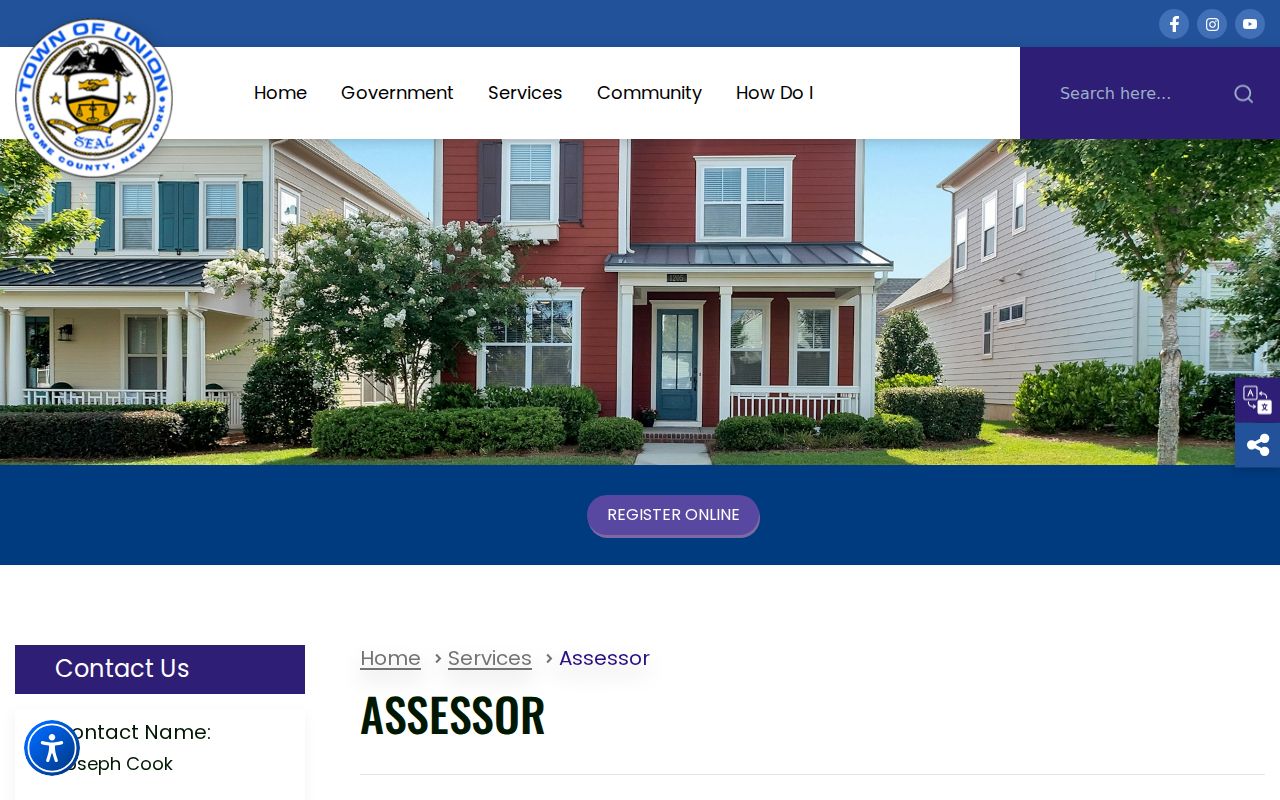
Copy the parcel key before moving on to tax, map, or deed records. The assessor information anchors every later lookup. Treat owner fields with care, though. An owner name or mailing address can point to a person, a trust, an estate, a business, or an address far from the parcel, so it never proves who actually lives there.
- Parcel ID
- A tax-map identifier that ties a property card to the county map and often to later record searches.
- Situs address
- The physical location of a parcel. It can differ from the owner’s mailing address.
- Roll
- An assessment list prepared for a defined municipal cycle, not a permanent proof of occupancy.
- Index
- A finding tool that points to a record. It may not include the underlying image or every older book.
Note: Note the assessment year on any record, since later roll updates can change an owner, value, or mailing field.
Town of Union Search Fields
Image Mate opens countywide. Narrow it with the Municipality and ZIP selectors. Type a street, name, or parcel number first. Those filters are handy for telling apart near-identical Town of Union addresses. GIS takes a different approach. It offers three direct parcel modes: parcel ID, owner name, and parcel address. Treat any single result as a lead. Check the municipality field and the map before you settle on a jurisdiction.
| Image Mate field | Input style | Town of Union use |
|---|---|---|
| Parcel ID Number | Exact or partial identifier | Carry a tax-map key into GIS and deed work |
| Owner Last Name | Full or partial text | Find an owner of record, not an assumed occupant |
| Parcel Address | Full or partial street address | Browse address-keyed parcel results |
| Municipality and ZIP | Selectors | Separate legal jurisdiction from delivery geography |
| Land use and zoning | Selectors | Explain whether a parcel is residential, commercial, vacant, or another class |
The Broome GIS portal offers tax maps, extra layers, map requests, and links to related county resources. Use the layers for location context. They do not replace a filed instrument.
Town of Union Deed Eras
Deeds in Broome fall into clear eras. SearchIQS holds the modern land index and images from 1963 forward. Its Historical Record Books span 1805 through 1962. The historical grantor and grantee Index Books run 1806 through 1939. Certain indexes reach 1988. That split actually helps a researcher. It signals which collection to open when a mid-century transfer never appears in the modern search box.
For a current deed, try party names. You can also try a date window, book and page, or an instrument number. Modern deed books carry a D prefix in the book field. Older documents may not respond to a Town filter. Drop it and search by party, date, or historic book instead. A deed records a conveyance. That makes it stronger proof of a transfer than a tax card. Even so, confirm the date and pull the underlying image.
Town of Union Current Directories
Each current Town of Union source answers one narrow question. Tax and property records name the record owner. They also give the billing details tied to a parcel. The Clerk's index works differently, listing the parties named on recorded documents. The voter lookup checks a single registration rather than working as a street directory. No official neighborhood-association roster or complete public resident list exists for the Town of Union. A careful search treats every source within its limits.
| Current source | What it may establish | Custodian | Access route |
|---|---|---|---|
| Assessor, Image Mate, GIS | Owner of record, parcel, assessment, and map context | Town Assessor and Broome Real Property | Official portal or local office |
| TaxLookup | Tax billing name, address, map number, bill number, and tax year | Broome tax system | Online search by address, owner, map number, or bill |
| Recorded land index | Deed, mortgage, lien, and related document parties | Broome County Clerk | SearchIQS, historic books, or counter |
| Voter Registration Search | An individual’s registration check with supplied identity fields | New York State | Official self-check, subject to state rules |
| Library and historian collections | Former listings, directories, newspapers, and family-history leads | BCPL and research repositories | In person, inquiry, film, or collection access |
A Town of Union resident lookup gains strength from two independent fields. Pair a name with a parcel ID. Or pair a name with an address dated in an older directory. Matching details like these keeps the residents directory search grounded in records rather than guesswork. Name-by-name methods sit on the resident lookup page. The historical shelf of the city directory record is treated separately.
Town of Union Voter Checks
The New York State Voter Registration Search asks for a last name, first name, date of birth, county, and address. It also asks for a ZIP. It works best for one registered voter checking a single registration. A miss is not proof of anything. Spelling differences cause misses, and so do moves, protected records, and portal limits. Treat a non-match as a cue to try another spelling. Do not treat it as evidence that anyone left Town of Union.
A full voter-file request follows a different rule. New York Election Law §3-103(5) requires the requester to state an elections purpose. The Board of Elections delivers that file through its own process. It does not hand it over as a public street roster. Broome's local elections office handles administration questions. For ordinary property research, parcel and deed records are the right address tools.
Note: A confidential-voter record may be incomplete by design, so never rebuild a protected address from other sources.
Town of Union Vital Routes
A vital record can prove a relationship or an event. It will not build a residents directory claim for Town of Union. The Town Clerk handles requests when the event occurred in the municipality. Marriage records follow the issuing municipality. The Town treats vital records as confidential. It offers a written immediate-family route to a $10 certified copy. For events outside New York City, the New York State Department of Health runs separate certified and genealogy paths. The Town vital-record instructions show the local form.
Genealogy access in New York runs on fixed clocks. Births generally need 75 years plus proof of death. Deaths need 50, and marriages 50 plus proof both parties died. A divorce certificate and a restricted decree are different records, and probate sits with Surrogate's Court rather than the County Clerk.
Town of Union Court Matches
A surname alone will not carry a court match. Record the court, case number, filing date, and result. State eCourts splits into WebCivil, WebCriminal, WebFamily, eTrack, and NYSCEF routes. An online omission can reflect a sealed, youthful-offender, adoption, or delayed-entry matter. The Town Court publishes no public docket interface. Its clerk is the fallback for a Town case. The New York decisions search covers published decisions, including Broome Supreme material.
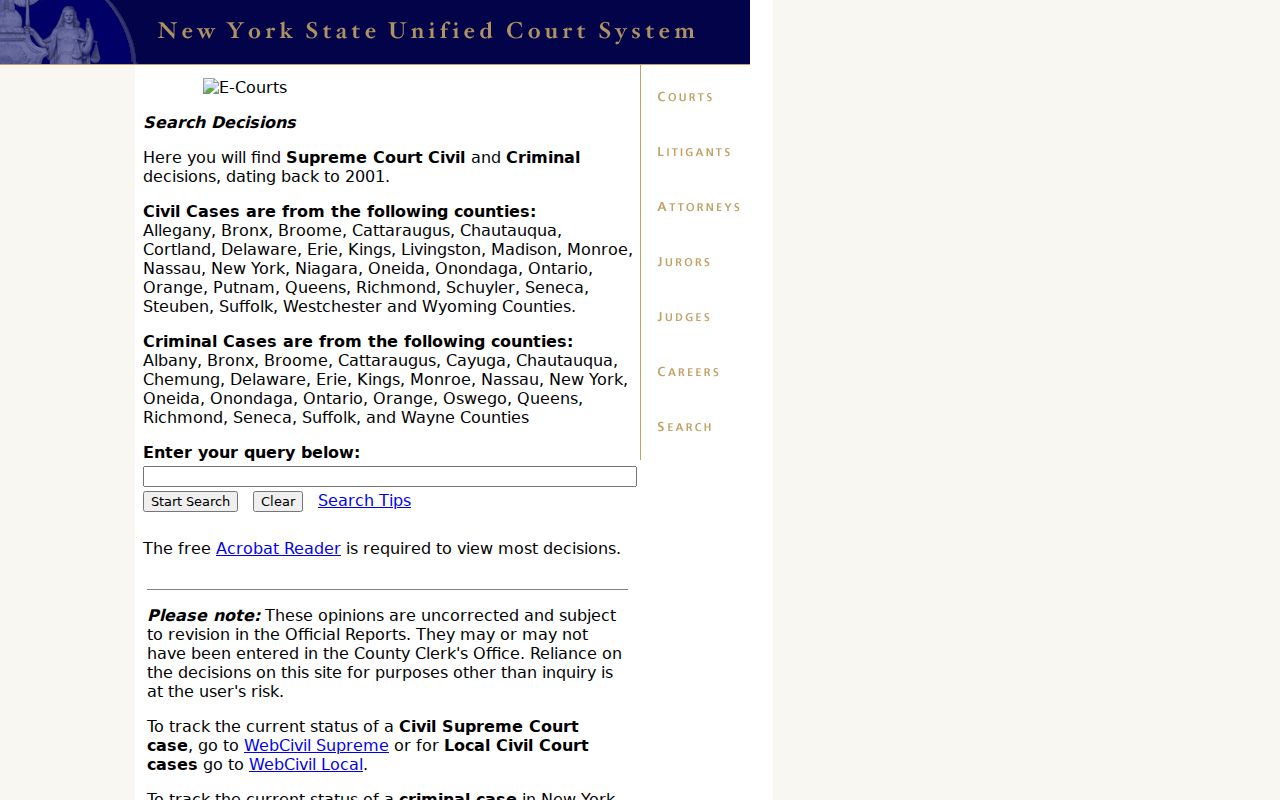
A decisions search surfaces published opinions. It is not a docket or identity check. Federal matters go through the proper PACER court route, with the division verified.
Town of Union Historical Directories
Historic directories for Town of Union sit on a regional shelf. No single town-only volume exists. The New York State Library holds Binghamton directory runs from 1857 through 1946, with gaps. Selected telephone books round out the shelf. The 1914 Calkin-Kelly title names Union, East Union, Endicott, Lestershire, and nearby places outright. Keep the printed locality heading. A modern postal label can mislead. The New York State Library directory holdings, the Broome County Local History & Genealogy Center, and the NYG&B collection supply the core access routes. The 1917 Rural Directory earns its keep when a farm, road, or land description appears before a familiar street number. The full collection-by-collection method sits on the Town of Union city directory page.
Town of Union Place Names
Place names are a records tool. Lestershire became Johnson City in 1916. Endicott incorporated in 1906. The villages of Endicott and Union merged in 1921. So a historical entry for one address may read Lestershire, Union, Endicott, Endwell, or Johnson City. Route 17 construction in 1967 removed homes and the old ballpark in Johnson City. A missing modern street segment may need a historic map, a newspaper, or a deed search. Town of Union formed in 1791. The Broome County Clerk map collection includes the Boston Purchase Map of that year, which supplies pre-street context for an early land trail. It does not replace a modern parcel or recorded deed.
Town of Union License Records
State professional and entity records can separate similar names. Their location fields are not a home-address finding. The New York State Education Department's verification tool searches a selected profession by last name, first name, or a six-digit license number. It can also search by license number alone. A last name needs at least three letters, and the first name is optional. Results can show name, profession, license number, location, original date, and registration status. A disciplinary summary may appear too. Older records run incomplete at times. The Office of the Professions verification search shows the field structure.
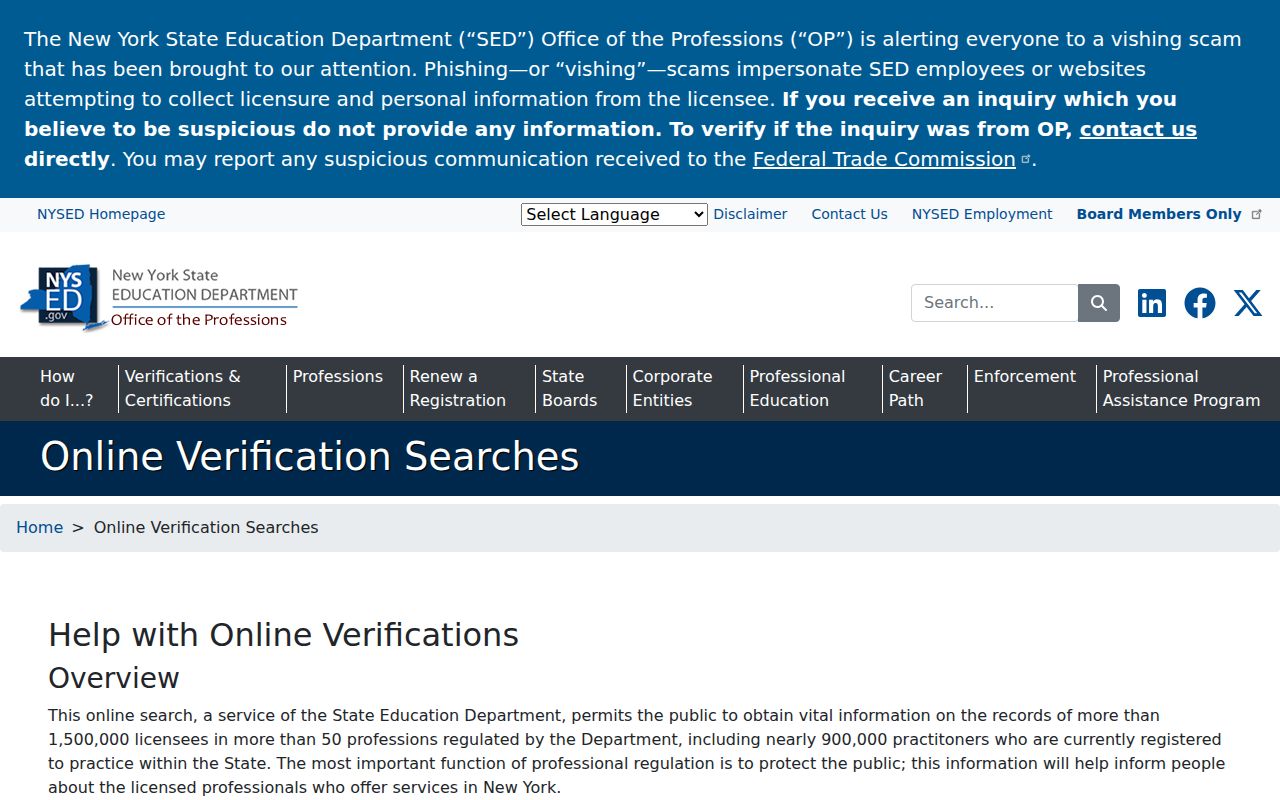
Treat a license result as a registry lead. A practice address is not a home. If the right person matters, compare the hit with a dated parcel, deed, court, or directory source, and never stretch a service address into a residence claim.
Town of Union Privacy Limits
New York public records have real boundaries. The Address Confidentiality Program can swap in a mailing address and shield the actual location for qualifying participants. The confidential-voter process can limit voter information. Vital copies, sealed court material, protected motor-vehicle data, and personal identifiers each carry their own rules. Sometimes a gap is the correct legal result.
Records that never appear in a residents directory still sit in town files. They never appear in an online lookup either. New York's Freedom of Information Law gives you a way to ask. The statute is Public Officers Law Article 6, §§84–90. Send a narrow written request to the Town Records Access Officer. Spell out the address, parcel or case reference, record type, date range, and the format you want. The Town names Leonard J. Perfetti as its Records Access Officer. It commits to acknowledging or responding within five business days.
County requests take a different path. Each county department routes its own mail. Files held through Records Management can stay in the custody of the office that created them. The creating office is often the better first stop for any record lookup.